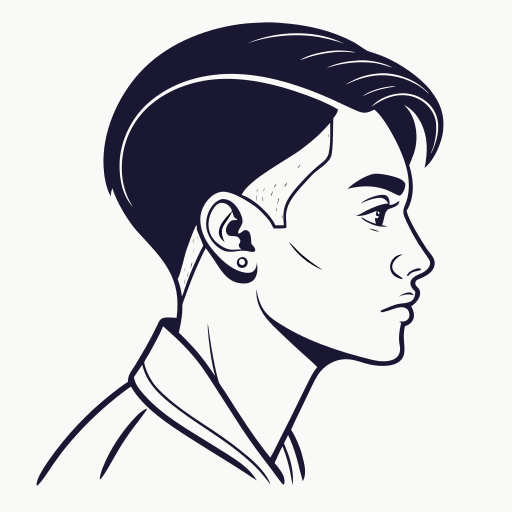
Skin Fade Faux Hawk: Modern Shapes and Barber Script
Learn how to get a skin fade faux hawk, how it differs from a mohawk, which fade height works best, and what to ask your barber.
Key takeaways
- A skin fade faux hawk is softer than a true mohawk because the center shape is styled upward rather than cut into one extreme strip.
- Ask for a faux hawk if you want daily wearability, and ask for a mohawk skin fade only if you want a narrower, bolder center strip.
- Mid and burst skin fades are usually the easiest shapes because they clean the sides while keeping enough curve around the temples and back.
- The top needs a clear ridge, texture, and crown direction; if the top is left too flat, the haircut reads like a normal textured crop.
- Use a barber script that names fade height, skin finish, center width, top texture, and whether the back should stay tapered, burst, or mohawk-shaped.
What is a skin fade faux hawk?
A skin fade faux hawk is a haircut where the sides and back fade down to visible skin while the top is cut and styled so the center can lift into a controlled ridge. It gives the shape and attitude of a mohawk-inspired haircut, but it is usually softer, wider, and easier to wear than a true mohawk skin fade.
The single core need behind this search is simple: you want a faux hawk or mohawk-style skin fade without asking for the wrong shape. That wording matters because faux hawk, fohawk, mohawk fade, burst fade mohawk, and skin fade mohawk can all produce different silhouettes in the chair.
A good faux hawk skin fade should still look like a complete haircut when it is not spiked up. The top should have enough length and texture to push toward the middle, but the sides should not be so empty that the style only works with product. The best version gives you two options: wear it pushed up and forward for the faux hawk shape, or relax it into a messy textured top when you want a quieter day.
Faux hawk skin fade vs mohawk skin fade
The main difference is how committed the center strip is. A faux hawk keeps more blended width on top, so the center can be styled upward without requiring the sides of the top to be shaved away. A mohawk skin fade is usually narrower, stronger, and more deliberate from front to back. Both can use a skin fade, but they do not ask the barber for the same cut.
| Style | How it looks | Best for |
|---|---|---|
| Skin fade faux hawk | Textured top lifts toward the center while the sides fade to skin | Wearable edge, office-flexible styling, first mohawk-inspired haircut |
| Skin fade fohawk | Same idea as a faux hawk, using the shorter spelling many barbers recognize | People searching or asking for fohawk wording |
| Mohawk skin fade | A narrower center strip runs from front toward the back with stronger side contrast | Bolder style, dense hair, people who want obvious mohawk shape |
| Burst fade mohawk | Fade curves around the ear and leaves more shape through the back | Curly hair, textured hair, rounded side profile, modern mohawk shapes |
| High skin fade faux hawk | Sides are cut higher, making the center look taller and sharper | Strong contrast, thick hair, frequent cleanups |
If you are unsure which one you want, ask for a faux hawk first. It leaves more room to adjust. A barber can make the center narrower next visit, but if the first cut removes too much side weight from the top, you have to wait for that width to grow back. This is especially important if your hair is fine, straight, or hard to style upward.
Photos can confuse the issue because many captions use mohawk and faux hawk loosely. Instead of relying only on the label, look at three details in the reference: how wide the top is, whether the back continues into a strip, and whether the fade curves around the ear or climbs straight up the side. Those details tell the barber more than the name alone.
Best fade height for a skin fade faux hawk
The fade height controls how dramatic the faux hawk looks. Low fades keep the style softer because more side hair remains under the top. Mid fades are the most balanced for many people because they make the skin finish visible without cutting too far into the center shape. High fades create the boldest silhouette, but they can make the top look narrow if the barber removes too much width.
| Fade option | What it does | Use it when |
|---|---|---|
| Low skin fade faux hawk | Keeps the bare-skin area low and leaves more side support | You want a subtle first version or need a softer work-friendly cut |
| Mid skin fade faux hawk | Creates visible contrast while keeping the top balanced | You want the safest modern version for most hair types |
| High skin fade faux hawk | Makes the center ridge stand out strongly | You like sharp contrast and can handle frequent maintenance |
| Burst skin fade faux hawk | Curves the fade around the ear instead of running straight across | You want a mohawk-inspired side shape without a severe back |
| Drop skin fade faux hawk | Lets the fade dip behind the ear and keep weight near the crown | You want cleaner sides but do not want the back to flatten |
For most people, mid skin fade faux hawk is the safest phrase. It tells the barber you want a visible skin finish, but it does not automatically force the sides too high. If your reference photo has a curved fade around the ear, add the word burst. If the fade dips lower behind the ear, add drop. If the side is shaved high and the top is very narrow, you are closer to a mohawk skin fade.
Head shape matters here. A high skin fade can expose bumps, flat spots, or a narrow crown more than a low or mid fade. A burst fade can make the haircut look more athletic and rounded from the side. A drop fade can protect the back shape if your crown grows flat or swirly. The right answer is not the highest fade; it is the fade line that supports the center ridge without making the haircut look accidental.
Top length, texture, and hair type
A skin fade faux hawk needs enough top length to move toward the center. If the top is too short, it becomes a spiky crop. If it is too long and heavy, it collapses sideways. Many wearable faux hawks need around 1.5 to 3 inches on top, with the front and center left long enough to lift and the side edges textured so they can blend into the faded sides.
Straight thick hair
Ask for point cutting or texture so the center can lift without turning into one hard block.
Fine hair
Keep the top a little shorter and avoid heavy thinning, because fine hair needs structure to stand up.
Wavy hair
Use the natural bend to create a softer ridge instead of forcing every strand straight upward.
Curly or coily hair
A burst or drop skin fade can frame the texture while leaving enough height through the center.
Receding corners
Keep the front looser and avoid an overly narrow center strip that points directly at the temples.
The crown is the detail that separates a good faux hawk from a haircut that only works from the front. If the crown is cut too short, it can stick up in the wrong direction. If it is left too long, the back of the faux hawk can split or fall flat. Ask the barber to follow the crown growth and keep the ridge controlled through the back, even if the front is the main feature.
Styling should be simple. Start with damp hair, add a light pre-styler or texture product, dry the top toward the center, then finish with clay, paste, or cream depending on the finish you want. Pomade can work for a glossy version, but heavy shine often makes a faux hawk look dated or stiff. A matte finish usually looks more modern and forgiving.
How to ask for a skin fade faux hawk
Do not ask only for a skin fade faux hawk and leave the rest open. The barber needs to know whether you want a soft faux hawk, a narrow mohawk, a burst fade, a high fade, or a textured crop that can be styled into a ridge. Good wording prevents the two most common mistakes: the top gets cut too flat, or the sides get cut so high that the haircut becomes more extreme than you wanted.
- Choose the fade heightSay low, mid, high, burst, or drop before the barber starts the side guideline.
- Confirm the skin finishAsk for the bottom faded to skin, shaver-close, or trimmer-close depending on how bare you want it.
- Define the center widthSay wider faux hawk if you want wearable styling, or narrower mohawk if you want stronger contrast.
- Protect the top lengthAsk to keep enough length through the front and center to style upward and slightly forward.
- Control the backTell the barber whether the ridge should continue through the back or fade into a normal neckline.
For a bolder version, change the script to high skin fade faux hawk or skin fade mohawk and ask for a narrower center strip. For a softer version, say low skin fade faux hawk and ask for a textured top that can be worn down on normal days. For curly or coily hair, ask about a burst fade because the curved side shape often suits the center height better than a straight high fade.
Skin fade faux hawk mistakes and next step
The biggest mistake is choosing the style from one front-view photo. A faux hawk skin fade is a side-and-back haircut as much as a top style. You need to know how high the fade travels, how the back connects, and whether the center ridge is wide or narrow. Without those details, two barbers can hear the same phrase and cut very different haircuts.
- Do not ask for a mohawk if you only want a textured top that can spike in the middle.
- Do not push the fade high on your first try unless you are comfortable with strong contrast.
- Do not over-thin fine hair, because the faux hawk needs structure to lift.
- Do not ignore the back; decide whether the shape should continue or blend into a normal neckline.
- Do not rely on product to fix a flat top; the cut must leave the right center length first.
Maintenance depends on how sharp you want the skin area. The fade is usually cleanest for the first week, then the bottom starts to soften as stubble returns. A high skin fade faux hawk can need a cleanup every 1 to 2 weeks to stay crisp. A low or mid version can often stretch closer to 2 to 3 weeks because the grow-out looks less abrupt.
The best conclusion is to start with a wearable skin fade faux hawk before jumping into a full mohawk skin fade. Ask for a mid or burst skin fade, keep a wider textured center, and bring a side-view reference so the barber understands the shape. If you want to compare options before the appointment, use SkinFade.app to preview fade height and save a barber-ready reference.
Skin fade faux hawk FAQ
Is a skin fade faux hawk the same as a mohawk?
No. A skin fade faux hawk is usually wider, softer, and more wearable, while a mohawk skin fade is narrower and more deliberate from front to back. Ask for a faux hawk if you want the safer version.
What fade works best with a faux hawk?
A mid skin fade is the safest all-around choice because it gives clear contrast without cutting too high. A burst fade works well if you want a more mohawk-inspired curve around the ear.
How long should the top be for a faux hawk skin fade?
Many wearable faux hawks need about 1.5 to 3 inches on top. The front and center should be long enough to lift, while the sides of the top should be textured so the shape does not look bulky.
Can I wear a skin fade faux hawk without product?
You can wear it relaxed, but the faux hawk shape usually needs some product or blow-drying. Ask for a wider textured top if you want it to look normal on days when you do not style it.
Should I ask for faux hawk or fohawk?
Both words usually mean the same haircut. To avoid confusion, say faux hawk or fohawk, then explain the center width, fade height, and whether you want it softer than a full mohawk.