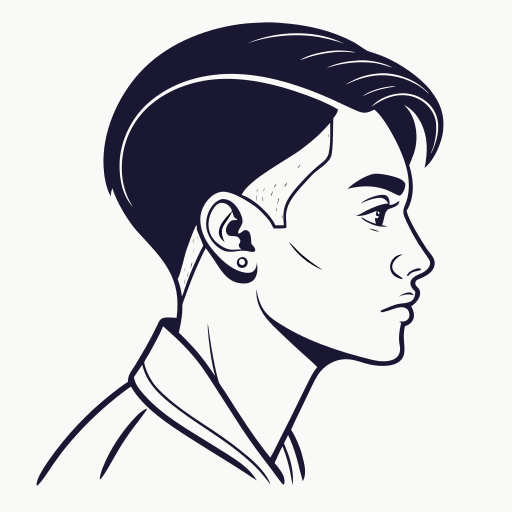
Low Drop Skin Fade: What It Looks Like and Who It Suits
Learn what a low drop skin fade looks like, who it suits, how it differs from a low fade, and exactly what to ask your barber.
Key takeaways
- A low drop skin fade blends down to visible skin while keeping the fade line low and curved behind the ear.
- It is usually softer than a mid or high skin fade, but more shaped from the side and back than a straight low skin fade.
- The style works especially well with curls, waves, textured crops, comb overs, short fringes, and beard blends.
- Ask your barber for a low skin fade that drops behind the ear, not a mid fade that wraps straight around the head.
- If you want a clean haircut that grows out calmly, a low drop skin fade is often safer than starting with a high fade.
What is a low drop skin fade?
A low drop skin fade is a skin fade that starts low near the sideburn and ear, then drops lower as it curves behind the ear and through the back of the head. The shortest area still goes down to visible skin, but the shape stays controlled instead of climbing high up the side.
That shape is the reason people search for this cut separately from a regular low skin fade. A standard low fade can travel around the head in a cleaner, straighter path. A low drop skin fade follows the head shape more closely, keeps extra weight above the occipital bone, and makes the back profile look more intentional.
The core need behind this search is simple: the person wants to know whether the low dropped shape will look better than a normal low, mid, or high skin fade. The best answer is visual and practical. You need to understand where the fade starts, where it drops, what hair stays above the ear, and how to describe the back before the barber begins cutting.
Low drop skin fade vs low fade, drop fade, and mid fade
Low, drop, and skin describe different parts of the haircut. Low describes height. Drop describes the curved shape behind the ear. Skin describes the shortest finish at the bottom. When all three are combined, you get a fade that is low, curved, and taken down to skin.
| Fade type | What changes | Best use |
|---|---|---|
| Low skin fade | The skin section stays low, often with a straighter path around the head | Clean first skin fade, office-friendly cuts, subtle grow-out |
| Low drop skin fade | The fade stays low at the temple and drops lower behind the ear | Curls, waves, crops, comb overs, and shaped back profiles |
| Drop skin fade | The fade drops behind the ear but may sit low, mid, or high | More side and back shape without a flat wraparound line |
| Mid skin fade | The skin section rises higher through the side | More contrast, stronger side profile, shorter top styles |
| High skin fade | The fade climbs close to the upper side of the head | Bold buzz cuts, high-and-tight looks, maximum contrast |
The main mistake is asking for a drop fade but not naming the height. If you only say drop fade, a barber may create a mid drop fade or a higher athletic shape. If you only say low skin fade, the barber may keep the line low but not curve it through the back. The full phrase low drop skin fade gives all three instructions at once.
This also matters for grow-out. A low drop shape usually grows out more softly than a high fade because less of the side starts at skin. After 7 days the bottom will show stubble, but the haircut can still read as shaped. After 2 to 3 weeks, it usually becomes a softer low fade rather than a fuzzy high fade.
Who suits a low drop skin fade?
A low drop skin fade suits people who want clean sides without making the whole haircut look severe. It keeps more hair above the temple than a high skin fade, so the face does not look as narrow from the front. From the side, the drop shape makes the fade look designed rather than simply short.
Curly or wavy hair
The drop shape can remove bulk around the ear while leaving enough side and back weight to support curls on top.
Straight or thick hair
A low drop skin fade adds shape without creating the harsh contrast that a high fade can show on dense straight hair.
Longer face shapes
Keeping the fade low helps preserve side balance, which can be more flattering than taking the sides too high.
Beards and stubble
The low placement gives the barber room to blend the sideburn into facial hair without making the cheek area look disconnected.
The cut may be less ideal if you want maximum contrast from across the room. A high skin fade or high-and-tight haircut will look sharper at first glance. It may also be less ideal if your barber is not comfortable shaping the back. A bad low drop fade can look like the back was left heavy by accident, so the curve needs to be deliberate.
For first-timers, the low drop skin fade is usually a smart test. You still see the clean skin finish around the lower sides, but the haircut is easier to adjust next time. If you love it, you can keep the same shape. If you want more edge, you can ask for a mid drop skin fade later.
Best top styles for a low drop skin fade
The low drop skin fade is flexible because it shapes the sides without dictating the top. The top can be short, curly, textured, parted, or left longer. The key is choosing a top style that benefits from a lower, curved fade rather than fighting it.
| Top style | Why it works | Barber note |
|---|---|---|
| Textured crop | The low drop keeps the sides clean while the crop stays natural and modern | Ask for texture on top and avoid pushing the fade above the temple |
| Curly top | The fade removes bulk around the ear without flattening the curls | Keep enough weight above the drop so the curl shape does not collapse |
| Comb over | The dropped back makes a classic side style look more tailored | Confirm the part and whether the fade should connect to a beard |
| Messy fringe | The lower fade balances a relaxed front without looking too heavy on the sides | Leave top length for movement and keep the neckline clean |
| Short waves | The low curve frames the wave pattern and keeps the back tidy | Ask for a soft blend above the drop line |
| Buzz cut | A low drop can make a short top feel less severe than a high skin fade | Use a clear top number such as 2, 3, or 4 before fading |
If you are choosing from photos, compare examples from the side and back. A front photo may show the crop, fringe, or curls, but it will not show whether the fade drops behind the ear. The side view should show the lowest point of the drop. The back view should show whether the neckline is rounded, natural, squared, or faded into the skin.
How to ask your barber for a low drop skin fade
The safest request is specific but still gives the barber room to adapt the haircut to your head shape. Do not say only low fade or drop fade. Say low drop skin fade, explain the shortest finish, and confirm what should happen to the top, sideburns, beard, and neckline.
- Name the heightSay low, so the fade starts around the lower sideburn and ear instead of the temple.
- Name the shapeSay drop, so the fade curves lower behind the ear and through the back.
- Name the finishSay skin, shaver-close, or trimmer-close depending on how bare you want the bottom.
- Name the top planSay whether to keep the top, crop it, texture it, leave curls, part it, or cut it to a number.
- Confirm the beard and necklineAsk whether the sideburn should blend into facial hair and how the neckline should finish.
If you do not want a fully bare finish, change the phrase to low drop fade, trimmer-close at the bottom, not shaver-close. If you want a beard blend, add: blend the sideburn into my beard naturally. If you want the top untouched, say that before the clipper work starts.
Maintenance, grow-out, and final checklist
A low drop skin fade looks sharpest during the first 3 to 7 days because the bottom is freshly cleaned to skin. Around 1 to 2 weeks, the skin-close area starts to soften, but the dropped shape should still be visible if the cut was blended well. Around 2 to 3 weeks, the haircut usually reads more like a grown-out low fade.
- Book every 1 to 2 weeks if you want the skin finish to stay sharp.
- Book every 2 to 3 weeks if you like a softer grow-out.
- Keep the neckline clean, but avoid trying to raise the drop line at home.
- Use lighter product on curly or wavy tops so the fade does not look disconnected.
- Bring a side and back reference for your next appointment if you liked the curve.
Before you decide, ask yourself three questions. Do you want the fade to stay low? Do you want the back to curve down instead of wrapping straight around? Do you want the bottom to go to visible skin? If the answer is yes to all three, the low drop skin fade is the right phrase to use.
If you are still unsure, preview the haircut before booking. Comparing a low skin fade, low drop skin fade, and mid drop skin fade from the side can make the decision much easier. The goal is not to copy one perfect photo. The goal is to walk into the barber chair with the fade height, drop shape, top length, and beard plan already clear.
Low drop skin fade FAQ
Is a low drop skin fade the same as a low skin fade?
Not exactly. Both can start low and blend down to skin, but a low drop skin fade curves lower behind the ear and through the back. A regular low skin fade may follow a straighter path around the head.
Does a low drop skin fade work with curly hair?
Yes. A low drop skin fade often works well with curly hair because it cleans the ear and neckline while leaving enough weight above the drop to support curl shape. Ask the barber not to cut the drop too high.
How long does a low drop skin fade last?
It looks sharpest for about 3 to 7 days, then softens as stubble appears. Most people recut or clean it up every 1 to 3 weeks, depending on how crisp they want the skin finish to stay.
What should I ask for if I do not want visible skin?
Ask for a low drop fade with a trimmer-close or zero finish instead of a low drop skin fade. That keeps the same curved shape but leaves a slightly softer bottom than a shaver-close skin finish.
Is a low drop skin fade professional?
Usually yes, especially when the top is neat and the fade stays low. It is cleaner and more shaped than a basic haircut, but less dramatic than a high skin fade, which makes it easier for many work settings.