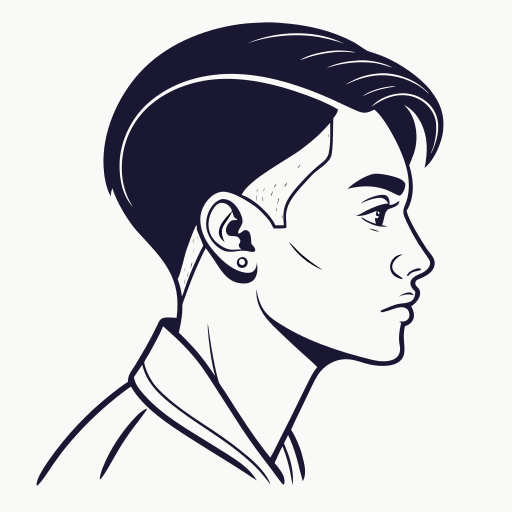
Balding Skin Fade: Can It Make Thinning Hair Look Better?
Use this balding skin fade guide to choose fade height, top length, barber wording, and scalp-safe details for thinning hair.
Key takeaways
- A balding skin fade works best when it makes the sides lighter than the thinning area instead of trying to hide hair loss with length.
- A mid or controlled high fade often balances a thin crown better than a very low fade because it reduces the dense horseshoe outline.
- A low skin fade for thinning hair is safer when the hairline is only mildly receding and you still want a softer, conservative result.
- Keep the top short enough to stand or texture, because long hair that collapses over thin areas usually makes the contrast more obvious.
- Ask for a barber consultation around your crown, hairline, scalp exposure, and beard shape before choosing the exact skin fade height.
What is a balding skin fade?
A balding skin fade is a skin fade planned around thinning hair, a receding hairline, or a balding crown. The sides and back fade down to visible skin, while the top is kept short, textured, or shaped so the thinner areas look deliberate instead of accidental. It is a styling choice, not a hair-loss treatment.
The single core need behind this search is simple: you want to know whether a skin fade helps or exposes thinning hair. The honest answer depends on where the thinning sits. A receding hairline, a thin crown, diffuse thinning across the top, and a strong widow's peak each need a different fade height and top length.
A skin fade helps most when it makes the haircut look intentionally short and balanced. It can expose thinning if the fade is too low, the top is left too long, or the barber creates a dark side wall that makes the crown look lighter by comparison. The goal is not to cover every thin spot. The goal is to remove the visual fight between thick sides and a lighter top.
Balding skin fade choices for thinning hair
The best balding skin fade choice starts with the thinning pattern. Male pattern baldness commonly shows as a receding front hairline, thinning at the crown, or both. A haircut cannot diagnose or reverse that pattern, but it can stop the surrounding hair from making the thinner area look more dramatic.
| Thinning pattern | Better fade choice | Top length | Why it works |
|---|---|---|---|
| Mild receding hairline | Low to mid skin fade | Short crop, textured fringe, or 1.5 to 3 inches | Keeps the front natural while cleaning up the sides |
| Deep temples | Mid skin fade with a soft temple blend | Short textured top or buzzed top | Reduces the contrast between temple recession and side density |
| Balding crown | Mid to high skin fade | Short enough to stand or lie evenly | Lightens the dense horseshoe area around the crown |
| Diffuse thinning on top | Mid skin fade or short all-over fade | Number 2 to 4 guard or tight crop | Avoids long pieces separating and revealing scalp |
| Strong beard available | Mid or high skin fade with beard blend | Short top | Moves some visual weight from scalp to jawline |
If you still have solid density on top, avoid jumping straight to the highest fade. A mid fade usually gives enough cleanliness without making the upper sides look stripped. If the crown is clearly lighter than the sides, a higher fade can be useful because it removes the dark band that frames the thinning area.
For a skin fade receding hairline request, the front edge matters more than the back. A hard lineup can look sharp on dense hair, but it can also make temple recession look more obvious when the natural corners are already moving back. A softer front outline, textured crop, or short Caesar-style direction often looks more forgiving.
Low, mid, or high skin fade for balding hair?
A low skin fade for thinning hair is the least aggressive option. It keeps more shadow on the side of the head and works when your hairline is only slightly receded or your top is still dense. It is also easier to wear in conservative workplaces because the skin section stays near the sideburn and neckline.
Low skin fade
Best for early recession, softer professional looks, and people who do not want a dramatic change; avoid it if a dark horseshoe shape around the crown is your main concern.
Mid skin fade
Best all-round choice for many thinning haircuts because it reduces side bulk without taking the fade so high that scalp exposure becomes the only feature.
High skin fade
Best for a thin crown, short buzzed top, or strong beard balance; it can look severe if the top is long, wispy, or disconnected.
Drop skin fade
Useful when you want the fade to curve below the crown, but the drop should not create a heavy dark ridge under a thin spot.
Buzz cut skin fade
Good when you are ready to make the whole haircut short and even, especially if longer styling is starting to separate or collapse.
A common mistake is asking for a low fade because it feels safer, then leaving the top long because it feels like more coverage. That combination often creates the exact problem the haircut is supposed to solve: thick sides, long weak top, and a crown or hairline that looks thinner by comparison.
If you are unsure, ask the barber to start with a mid skin fade and a short textured top. It gives enough contrast to look clean, but it leaves room to go higher next time. A barber can always raise the next fade, but they cannot put back a high skin section during the same appointment.
How to ask for a balding skin fade
Do not ask only for a balding skin fade and hope the barber guesses the rest. Say where you are thinning, how exposed you are willing to go, and whether you want to soften or sharpen the hairline. The consultation should happen with dry hair first, because wet hair can make density look different.
- Show the thinning areaPoint out the crown, temples, or diffuse thin spots before the cape goes on so the barber plans the shape around the real issue.
- Set the top lengthAsk whether a number 2, 3, 4, short crop, or textured scissor top will make the density look most even.
- Choose fade height after seeing the topLet the top-length decision guide the fade height, because a long top and a high fade can look disconnected on thinning hair.
- Discuss the front edgeAsk for a natural hairline if your temples are receding, or a very light lineup only where the hair is still dense.
- Use the beard if you have oneIf you wear facial hair, ask for a beard blend that adds shape below the fade and balances a shorter top.
If your barber suggests going shorter than you expected, ask them to explain the visual reason. A good answer will mention density, crown contrast, side weight, or how the top behaves when dry. A weak answer is just that short hair hides everything, because it does not. Short hair only helps when the proportions are right.
Scalp and hair-loss notes before a balding skin fade
A skin fade does not cause male pattern baldness, and it does not treat it. MedlinePlus describes male pattern baldness as a common hair-loss pattern related to genes and hormones, usually involving recession at the front and thinning at the crown. A haircut can change how that pattern is framed, but it cannot change the follicles underneath.
The American Academy of Dermatology also notes that hair loss has many causes, and some patterns need medical attention. Rapid shedding, patchy loss, pain, scaling, redness, pus, sudden breakage, or loss after a medication change should not be treated as a barber problem. Get medical advice first, then choose the haircut once the scalp is safe to clipper close.
Also be careful with tight styles if you keep length elsewhere. The American Academy of Dermatology warns that hairstyles that continually pull on the scalp can contribute to traction alopecia. That is less about the skin fade itself and more about what you do with remaining long hair, braids, ponytails, or tied-back styles.
Balding skin fade mistakes to avoid
- Leaving the top long and flat when it no longer has enough density to hold shape.
- Keeping the fade too low when the crown is thin and the side hair is very dark.
- Using a hard front lineup on a hairline that is already receding at the temples.
- Choosing a high skin fade without checking how much scalp will show from the front.
- Trying to hide a bald spot with a comb-over that separates in wind, sweat, or daylight.
- Ignoring scalp irritation, scaling, pain, or sudden shedding because the haircut looks urgent.
The simplest test is to look at the haircut from three angles before the final styling product goes in: front, side, and crown. If the sides look heavier than the thin area, the fade may need to go slightly higher. If the top looks stringy, the top may need to go shorter or be textured differently.
Balding skin fade next step
The best balding skin fade is not the most extreme fade; it is the one that makes your remaining hair look intentional from normal conversation distance. Start with the thinning pattern, choose a top length that behaves when dry, then use the fade height to reduce side bulk. If your goal is a cleaner, more confident haircut for thinning hair, a mid skin fade with a short textured top is usually the safest first brief.
Balding skin fade FAQ
Is a skin fade good for balding hair?
A skin fade can be good for balding hair when it reduces heavy side density and makes the top look intentionally short. It works less well if the top is left long, flat, or wispy because that contrast can make thinning more obvious.
Should I get a low or high skin fade for thinning hair?
Choose a low skin fade if the hairline is only mildly receding and you want a softer look. Choose a mid or controlled high skin fade if the crown is thin and the dense side hair is making the top look lighter.
Can a skin fade hide a receding hairline?
It can soften the contrast around a receding hairline, but it cannot truly hide it. A short textured top, natural front edge, and mid skin fade usually look more convincing than a hard lineup or long comb-over.
Does a skin fade make bald spots worse?
A skin fade does not make bald spots medically worse, but the wrong height can make them more visible. If the crown is thinning, ask the barber to balance the side density instead of leaving a dark ring around the thin area.
What should I ask my barber if I am balding?
Ask for a consultation before cutting: show the crown and hairline, request a short textured top, and ask whether a mid skin fade or slightly higher fade will make the density look most even. Avoid vague requests like just clean it up.